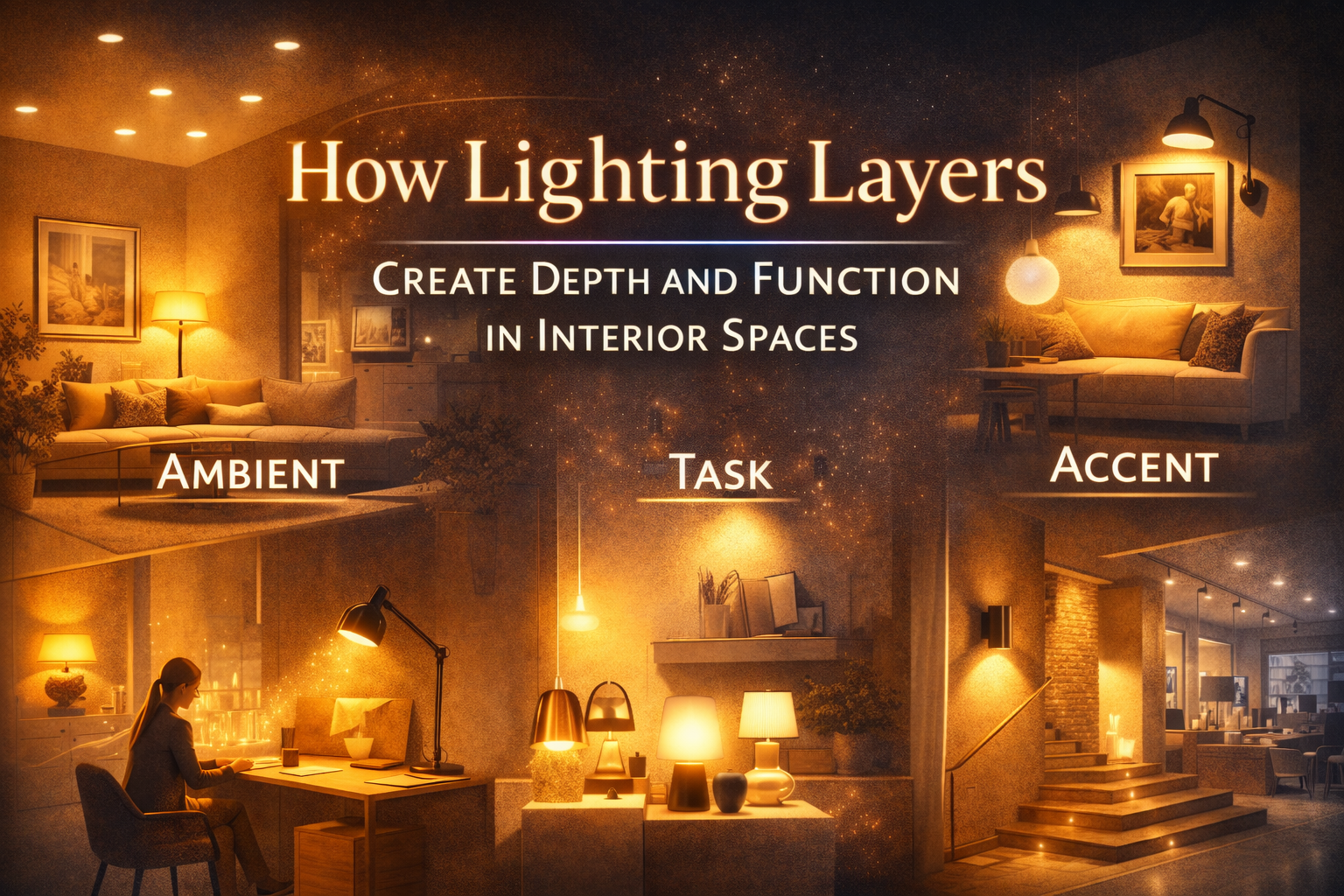
Layered lighting is a fundamental principle in effective interior design. Relying on a single light source often results in flat, uncomfortable environments that fail to support real-world use. By combining different types of lighting, designers create spaces that feel balanced, adaptable, and visually engaging throughout the day.
Rather than illuminating everything evenly, layered lighting introduces hierarchy and purpose. This approach enhances usability while allowing light to respond naturally to movement, activity, and spatial boundaries.
The Importance of Layered Lighting in Modern Interiors
In many panet lighting Toronto projects, layered lighting is used to establish clarity and control within both residential and commercial spaces. Instead of depending on one dominant fixture, light is distributed across multiple layers to reduce glare, soften contrasts, and improve overall comfort.
This method supports how people actually experience interiors. Different areas require different light levels, and layered lighting allows designers to address those needs without over-lighting the entire space.
Ambient Lighting as the Base Layer
Ambient lighting forms the foundation of a lighting plan. It provides general illumination and defines the overall brightness of a room. When designed correctly, ambient lighting creates a comfortable visual baseline without drawing attention to itself.
Indirect lighting, recessed fixtures, and concealed light sources are often used to achieve even distribution. This reduces harsh shadows and creates a calm, stable environment suitable for everyday use.
Task Lighting for Focused Activities
Task lighting delivers precision where it is needed most. Activities such as reading, cooking, working, or grooming benefit from targeted illumination that improves visibility and reduces eye strain.
In well-planned shop lighting in Toronto, task lighting is often integrated discreetly into shelving, counters, and work surfaces. This ensures functionality without disrupting the overall design language of the space.
Accent Lighting and Visual Depth
Accent lighting adds dimension by highlighting architectural features, materials, and focal points. It introduces contrast and depth, preventing interiors from feeling flat or monotonous.
Wall grazing, directional spotlights, and linear lighting are commonly used to emphasize texture and form. When applied selectively, accent lighting enhances character without overwhelming the space.
How Layered Lighting Shapes Spatial Perception
Layered lighting directly influences how spaces are perceived. Vertical lighting can visually raise ceilings, while horizontal lighting expands a room’s width. In smaller spaces, indirect and accent lighting soften boundaries and reduce visual clutter.
In larger interiors, layered lighting helps define zones and circulation paths. Instead of uniform brightness, controlled light levels guide movement and create areas of focus.
Flexibility Through Lighting Layers
One of the key advantages of layered lighting is adaptability. Different combinations of light layers can support changing needs throughout the day.
Ambient lighting may dominate during daylight hours, while task lighting becomes more prominent during focused activities. In the evening, accent lighting often takes priority, shaping atmosphere and comfort without excessive brightness.
Layered Lighting as a Design Essential
Layered lighting is not about adding more fixtures, but about assigning clear roles to light. Each layer contributes to comfort, functionality, and visual depth.
When planned intentionally, layered lighting supports interiors that feel responsive, balanced, and enduring. This approach ensures that lighting enhances daily experience rather than competing with the space itself.